The breed · IGBA / GFCC standard

The Gloster Canary

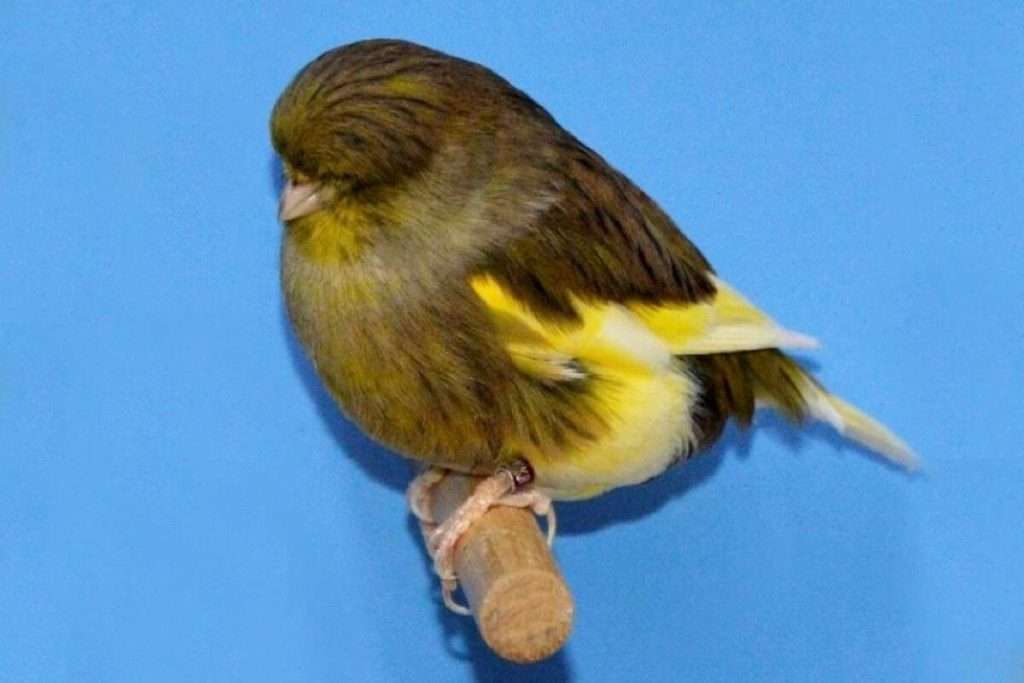
Small, round and elegant — one of the world’s most popular exhibition canaries, in its two varieties: the crested Corona and the plain-headed Consort.
History of the breed

Born from one idea: "everything small is beautiful"

In the aftermath of the First World War, in 1919, nobody imagined that a simple idea would give rise to one of the world’s most famous ornamental birds. The story begins in the county of Gloucester, England, where breeder Mrs Rogerson, convinced that “everything small is beautiful”, crossed crested canaries (Crested Roller) with small Borders to obtain a smaller, well-proportioned bird with smooth plumage. At the same time, in Scotland, John McLay was pursuing a similar idea.

In 1925, the first birds were shown at the London national exhibition — so distinctive that a special class was created for them. The breed was divided into two types — the Corona (crested) and the Consort (plain-headed) — and named Gloster in tribute to the Gloucester region. After the Second World War, enthusiasts such as Fred Bryant helped save the breed and establish its modern standards.

Gloster Histoire 1
The standards

The breed standard

To guarantee the quality and consistency of the breed, Gloster judging is based on a precise, internationally recognised standard. The Gloster canary comes in two complementary varieties: the Corona (crested) and the Consort (plain-headed).
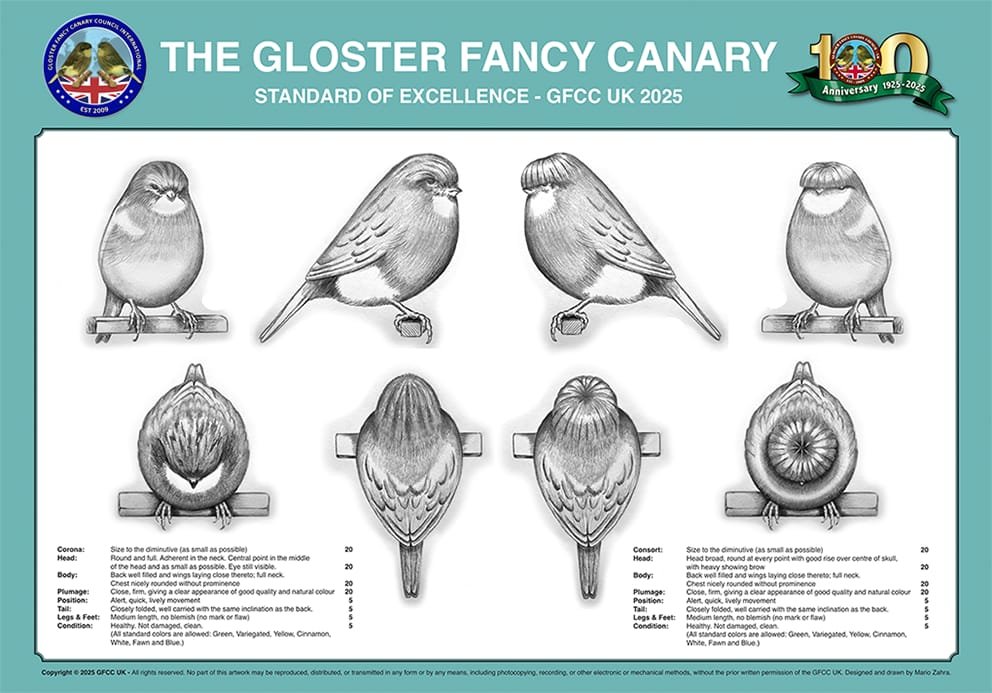
Standard of Excellence GFCC
Standard of Excellence — GFCC UK 2025 (illustration: Mario Zahra).
The two varieties

Corona & Consort

Crested variety

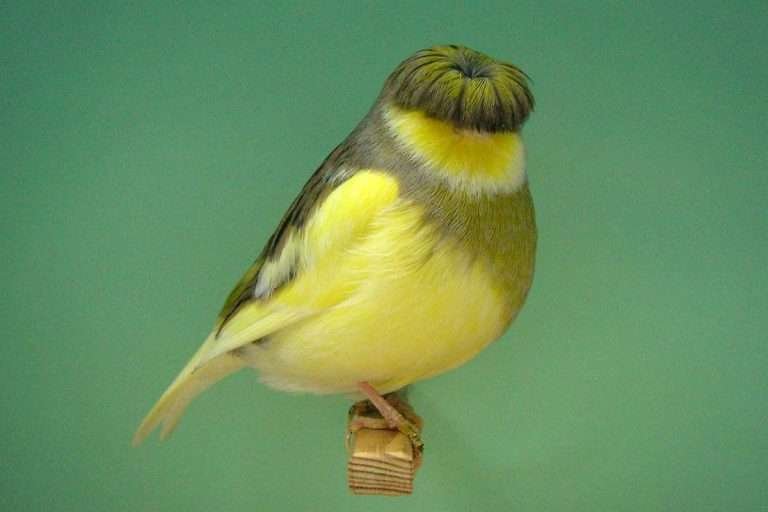
The Corona

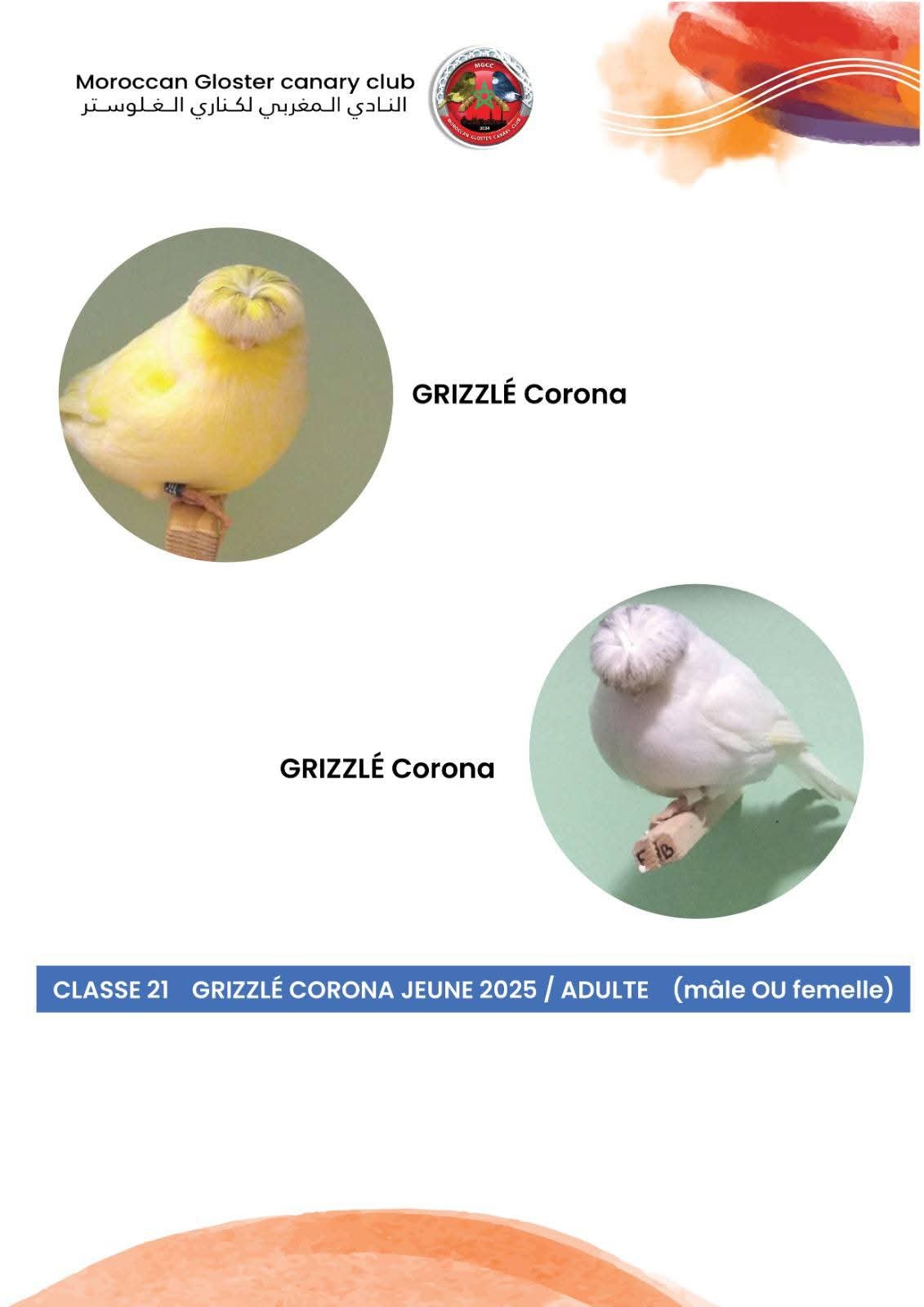
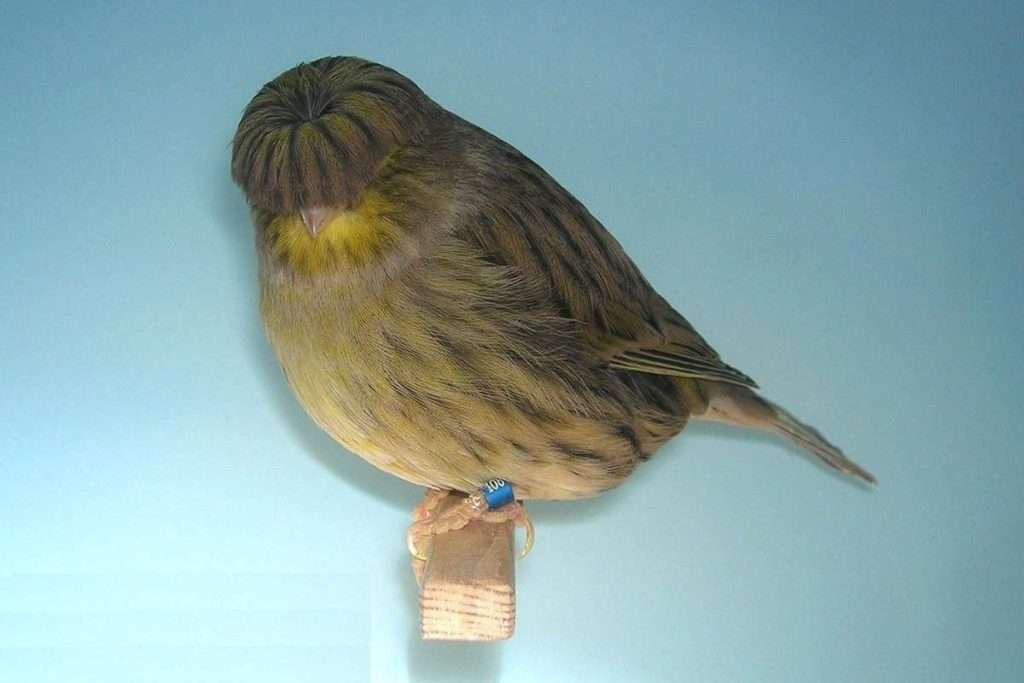
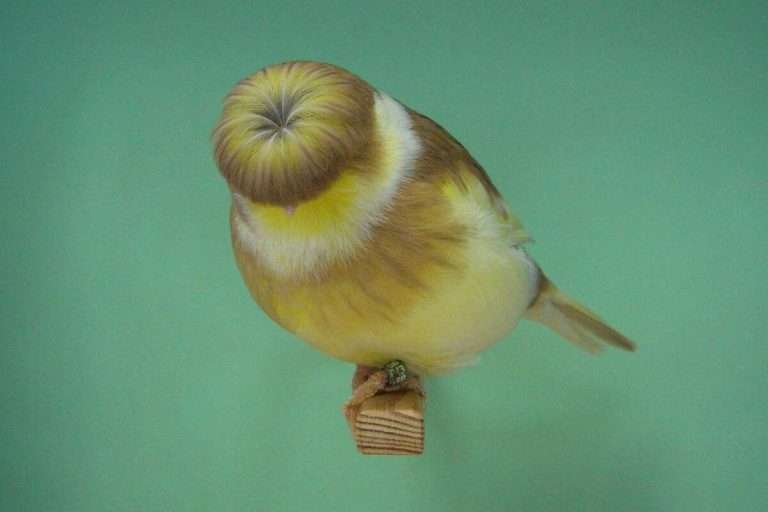
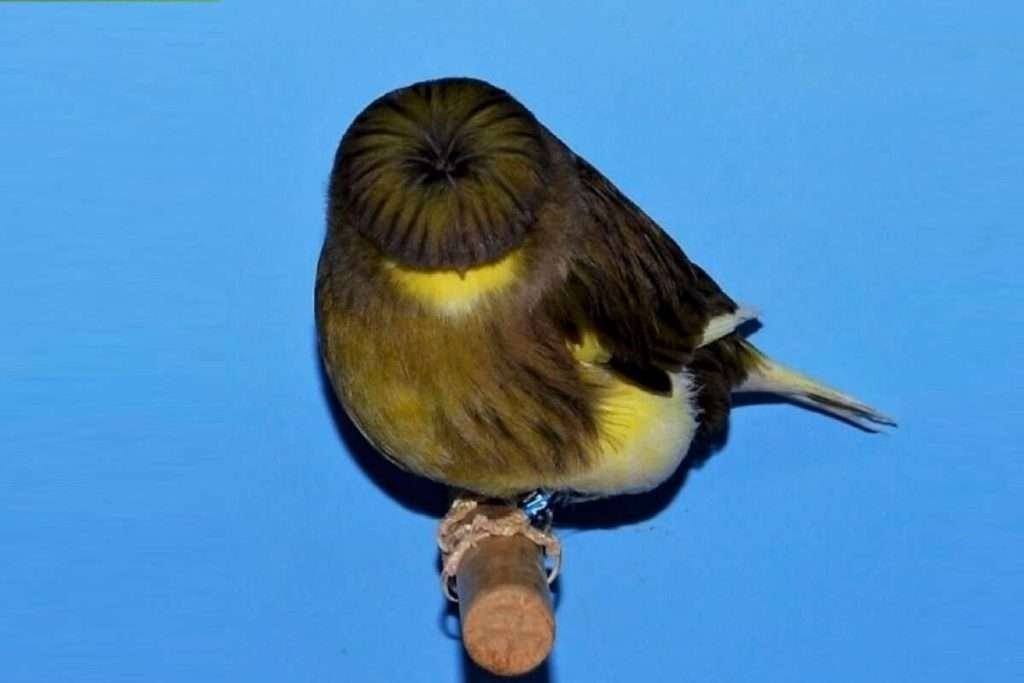
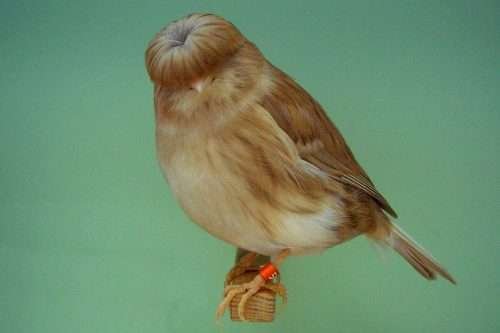
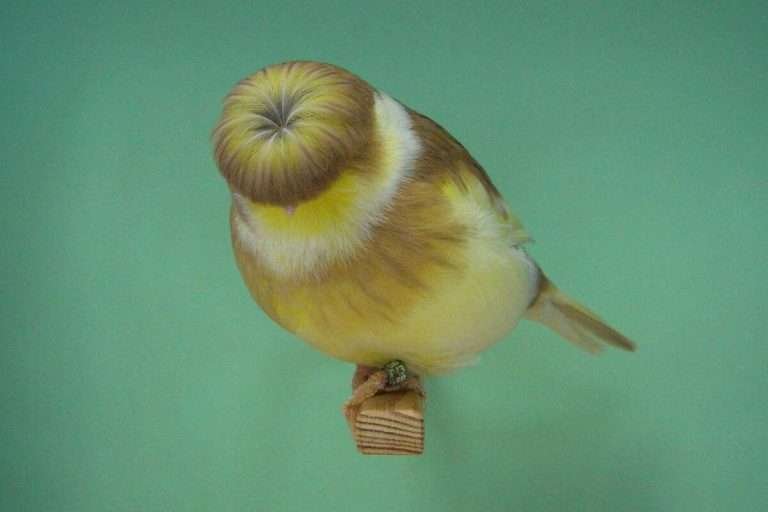
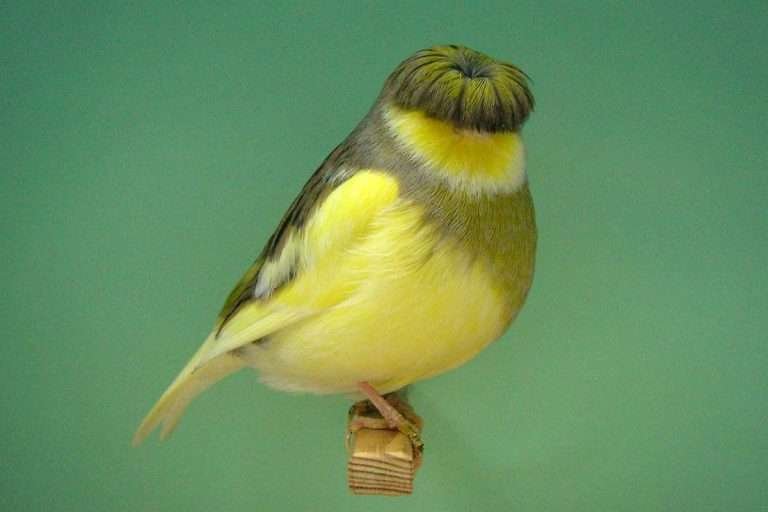
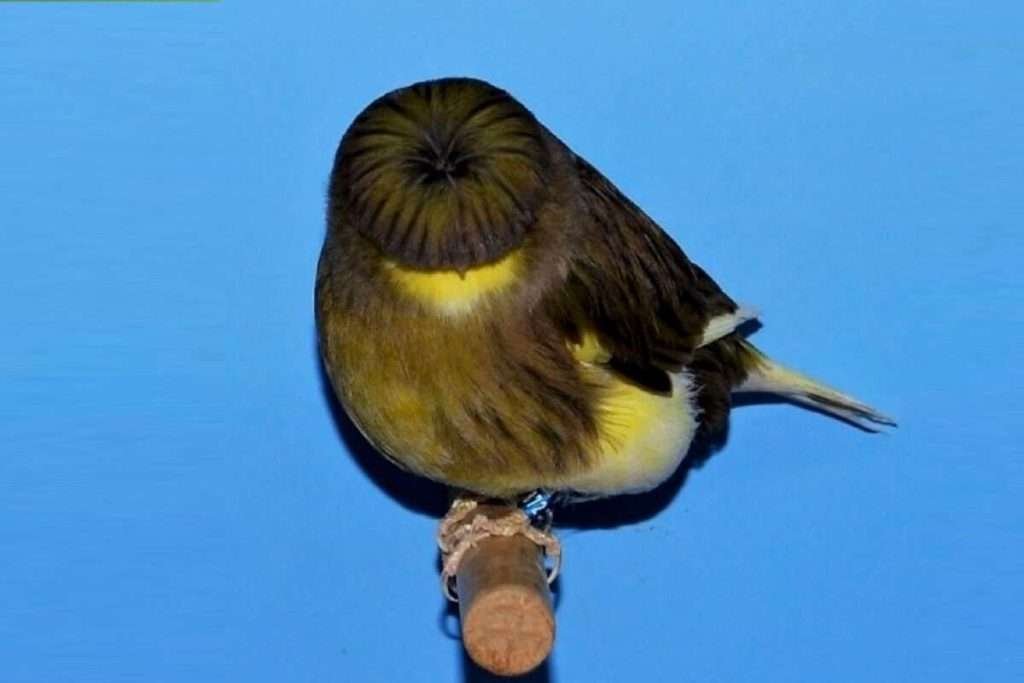
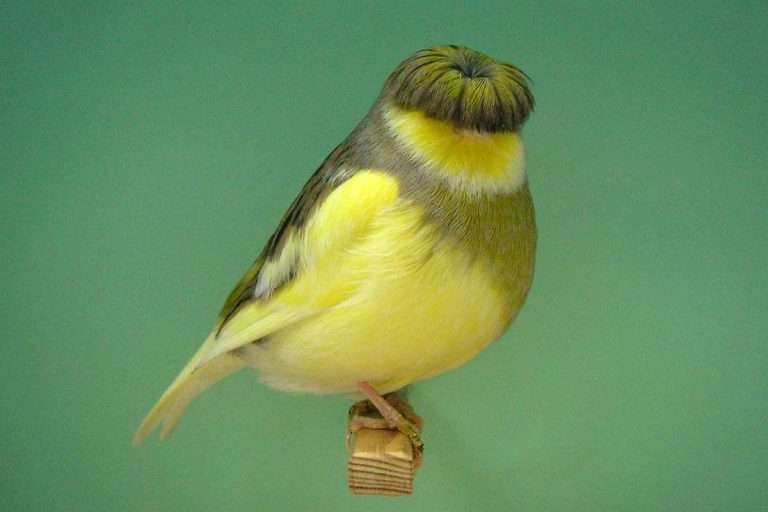
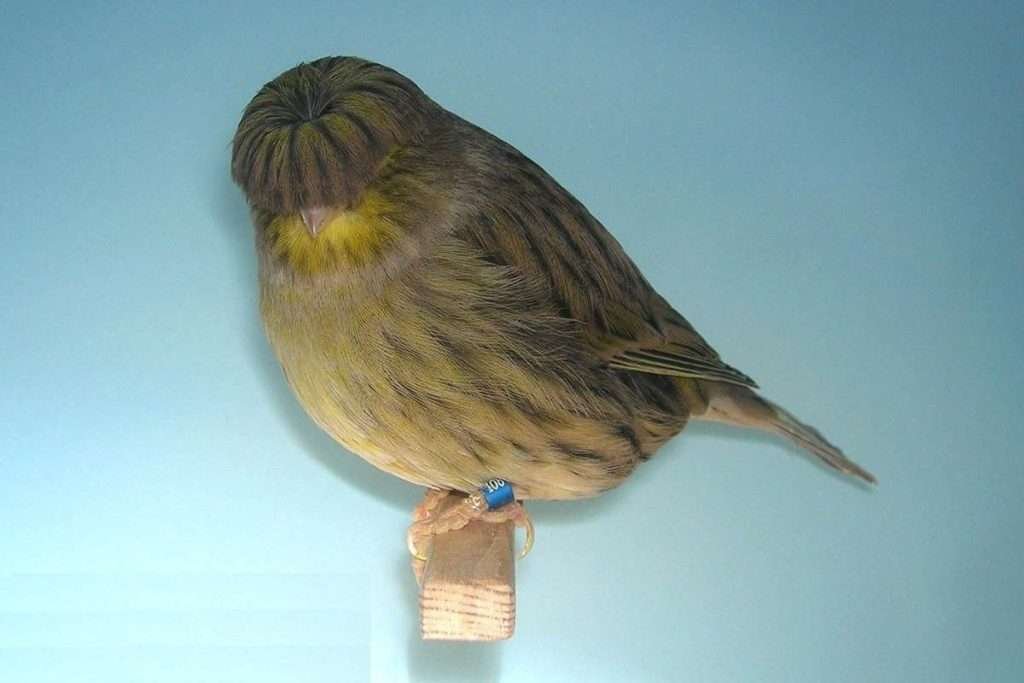
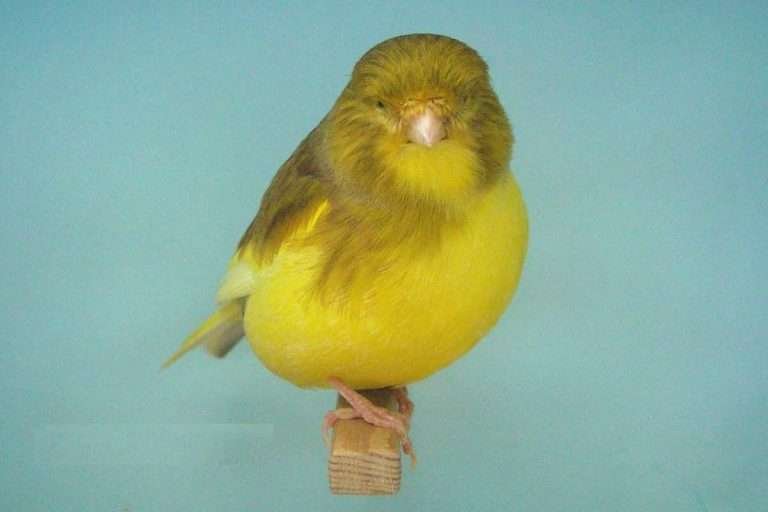
The Gloster Corona is the crested variety of the Gloster canary, characterised by its distinctive circular crest, the main feature of the variety.

General appearance — a compact, cobby, harmonious silhouette, showing balance between body, head and feather quality. The bird gives an impression of neatness, refinement and overall symmetry, with no feature exaggerated.

Size — small, as close as possible to the distance between the perches of the show cage. The bird should look small yet lively, never long, coarse or thin.

Head and crest — the crest is round, full and symmetrical, forming a complete circular outline; the feathers radiate evenly from a small centre point, creating a natural, regular droop. It sits neatly on the head, without heaviness or distortion, and flows into it. The eyes remain visible through the feathers. No splits, irregular growth or excess volume. The crest completes the body without dominating it.

Body — short, compact and well rounded, with good width at the shoulders and chest; a smooth, slightly curved back tapering gradually to the tail.

Wings — neatly folded and held tight to the body, without crossing. Tail — short, narrow and in proportion, carried in line with the back. Legs and feet — of moderate length, allowing the bird to stand confidently without appearing leggy.

Feather quality — smooth, tight and silky, showcasing the bird’s rounded shape while keeping definition and refinement.

Condition — alert, clean and well presented, showing vitality and excellent preparation for the show.

Plain-headed variety

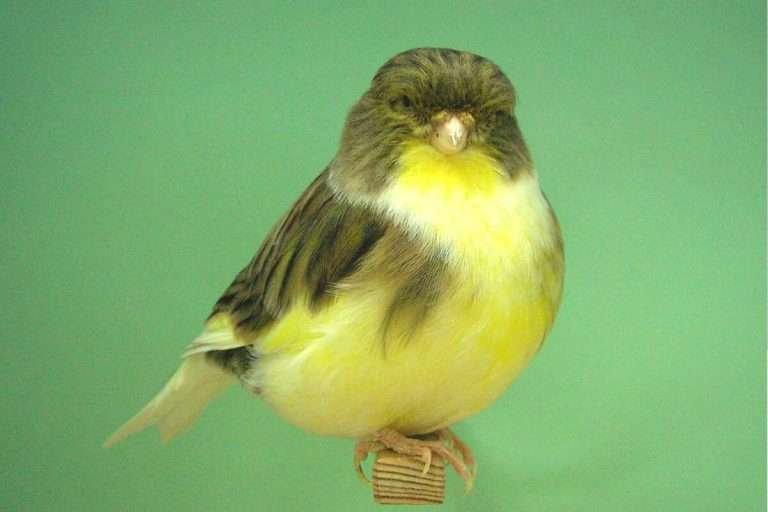
The Consort

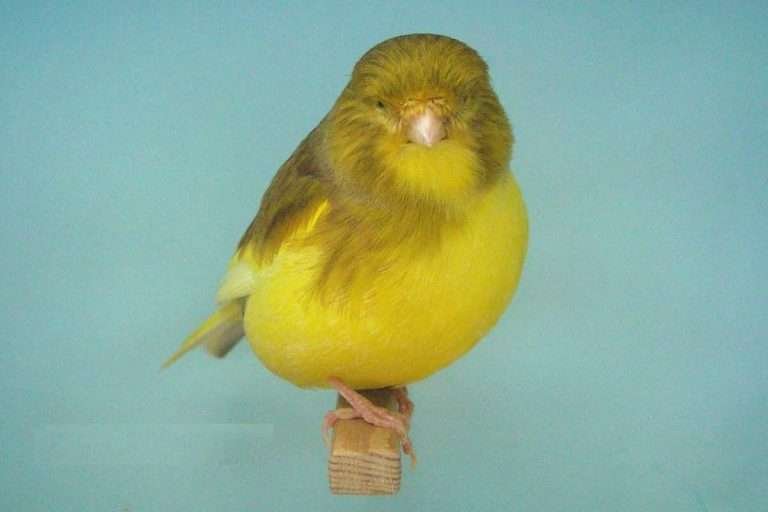
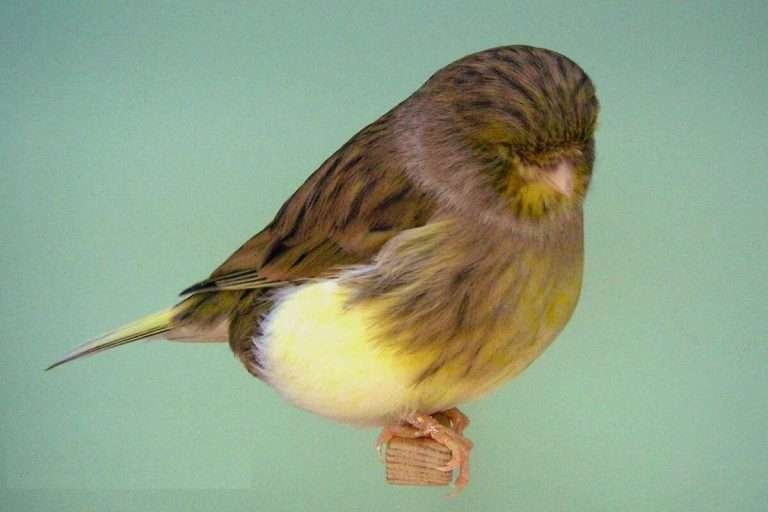
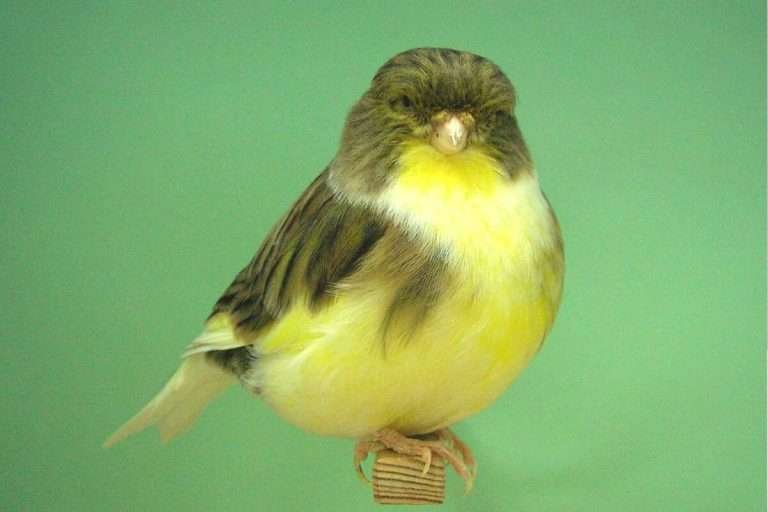
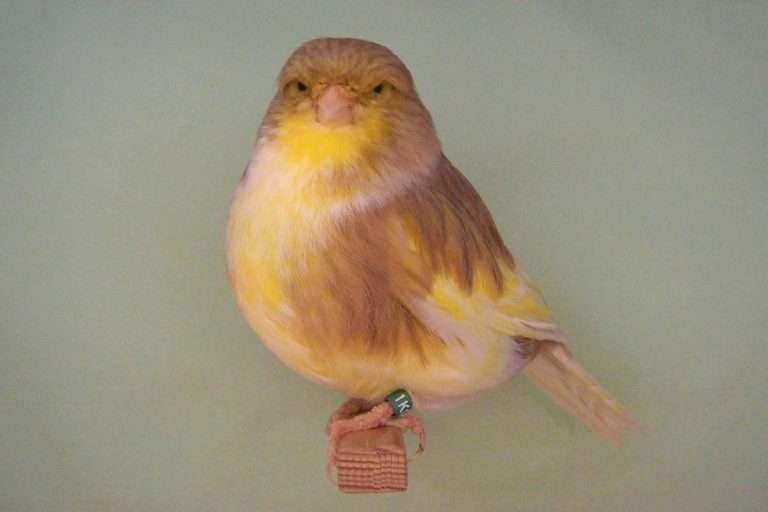
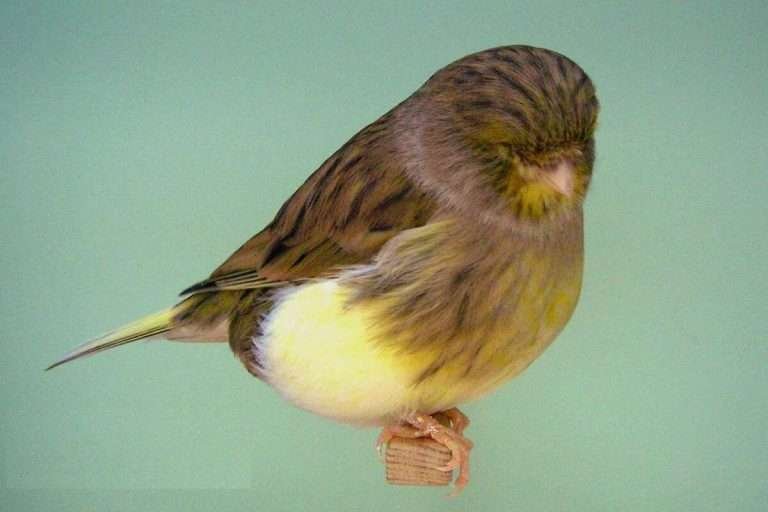
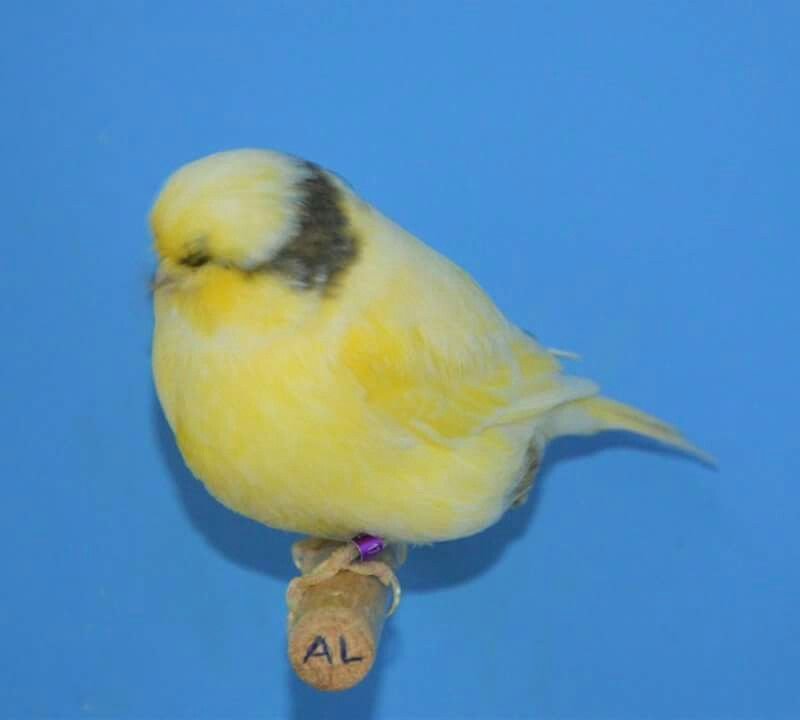
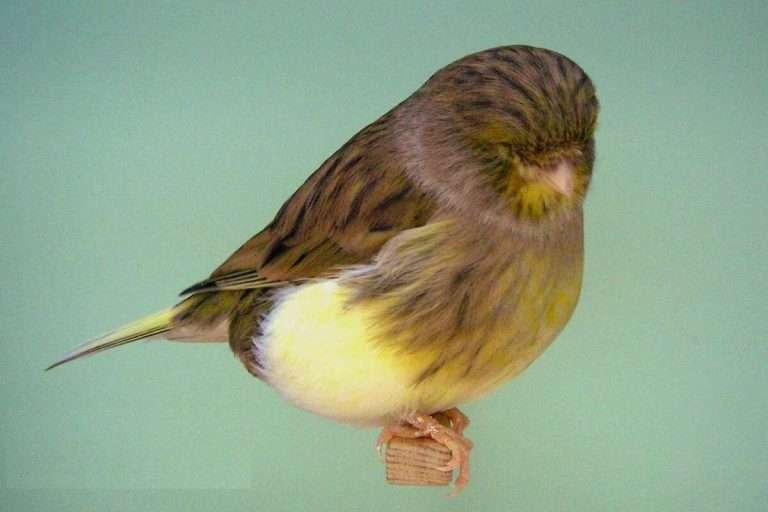
The Gloster Consort is the plain-headed variety of the Gloster Fancy canary; it represents the pure expression of the breed’s type, balance and feather quality, without a crest.

General appearance — a compact, cobby, harmonious silhouette combining refinement and substance. Balance and proportion are essential, with no feature appearing exaggerated: an impression of neatness, roundness and elegance.

Size — ideal length of about 11 cm (4.5 inches). The bird should look small and sturdy, never long, coarse or narrow.

Head — broad, rounded and well proportioned, flowing smoothly into the body line. The skull is wide with a slightly rounded profile; the eyebrows well defined without being heavy; the expression soft and pleasing. The Consort’s head is often described as representing the “true type” of the breed.

Body — short, compact and well rounded, with good width at the shoulders and chest; a smooth, slightly curved back tapering subtly to the tail.

Wings — well carried and held tight to the body, without crossing or drooping. Tail — short, narrow and in proportion, carried straight in line with the back. Legs and feet — of moderate length, allowing the bird to stand comfortably without appearing tall or too upright.

Feather quality — tight, smooth and silky, showcasing the rounded shape while keeping good definition; long or loose feather is undesirable. Condition — lively, clean and well presented, demonstrating excellent health, condition and show preparation.

Key points in common: small size (about 11 cm) · short, compact, well-rounded body · wings held tight to the body · short tail in line with the back · tight, smooth, silky feather · impeccable condition, a lively, well-presented bird.

The colour varieties

One standard, many categories

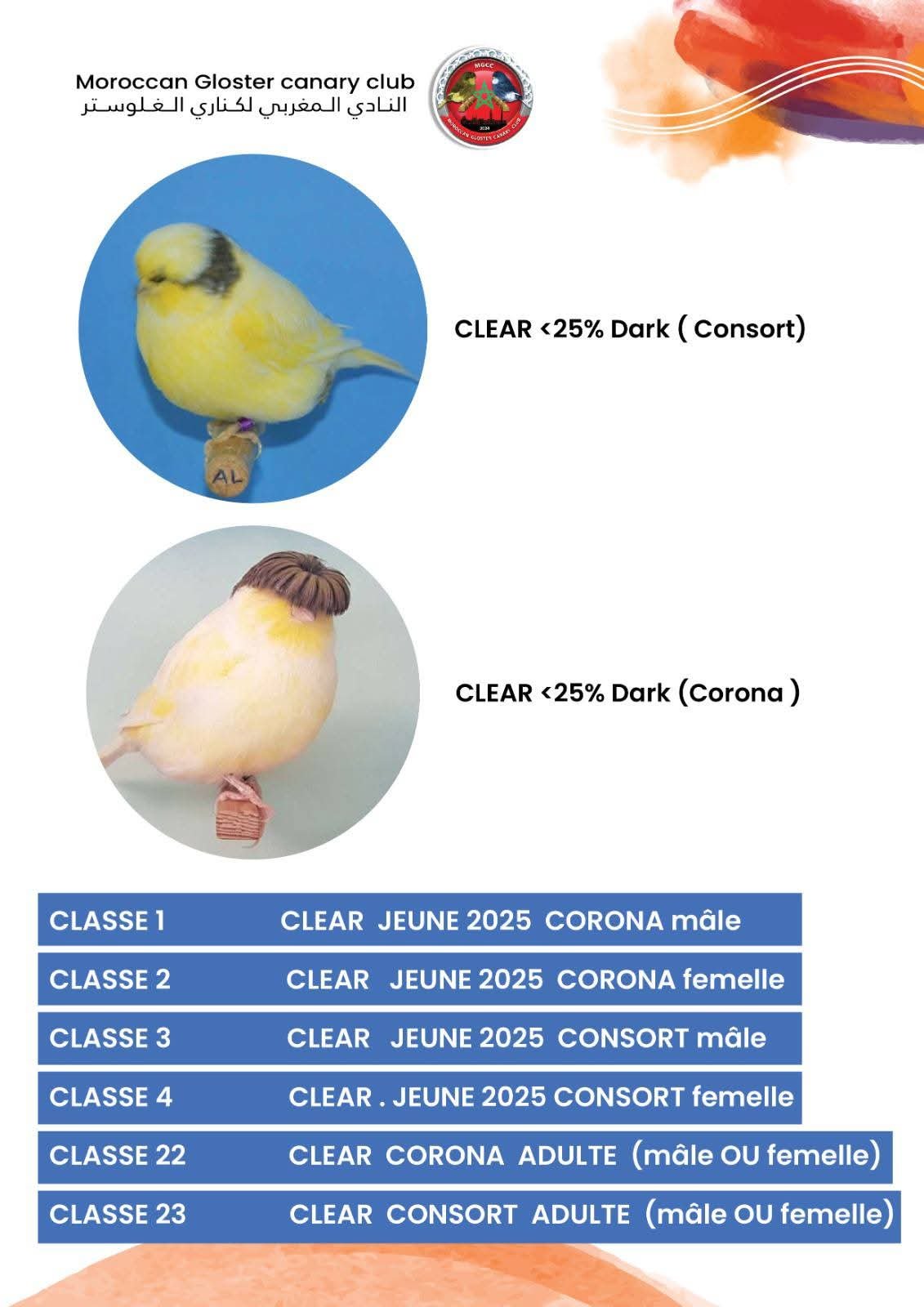
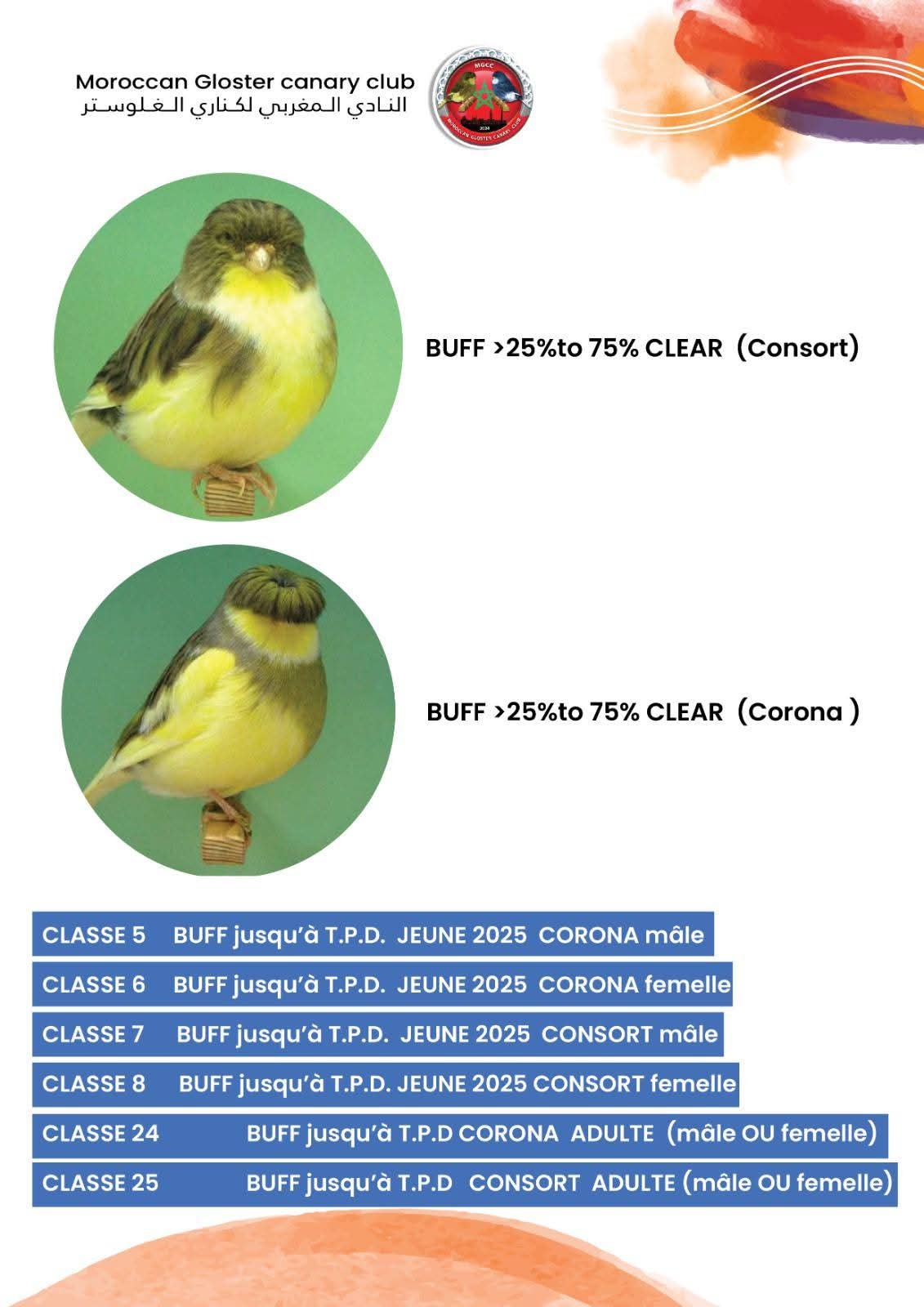
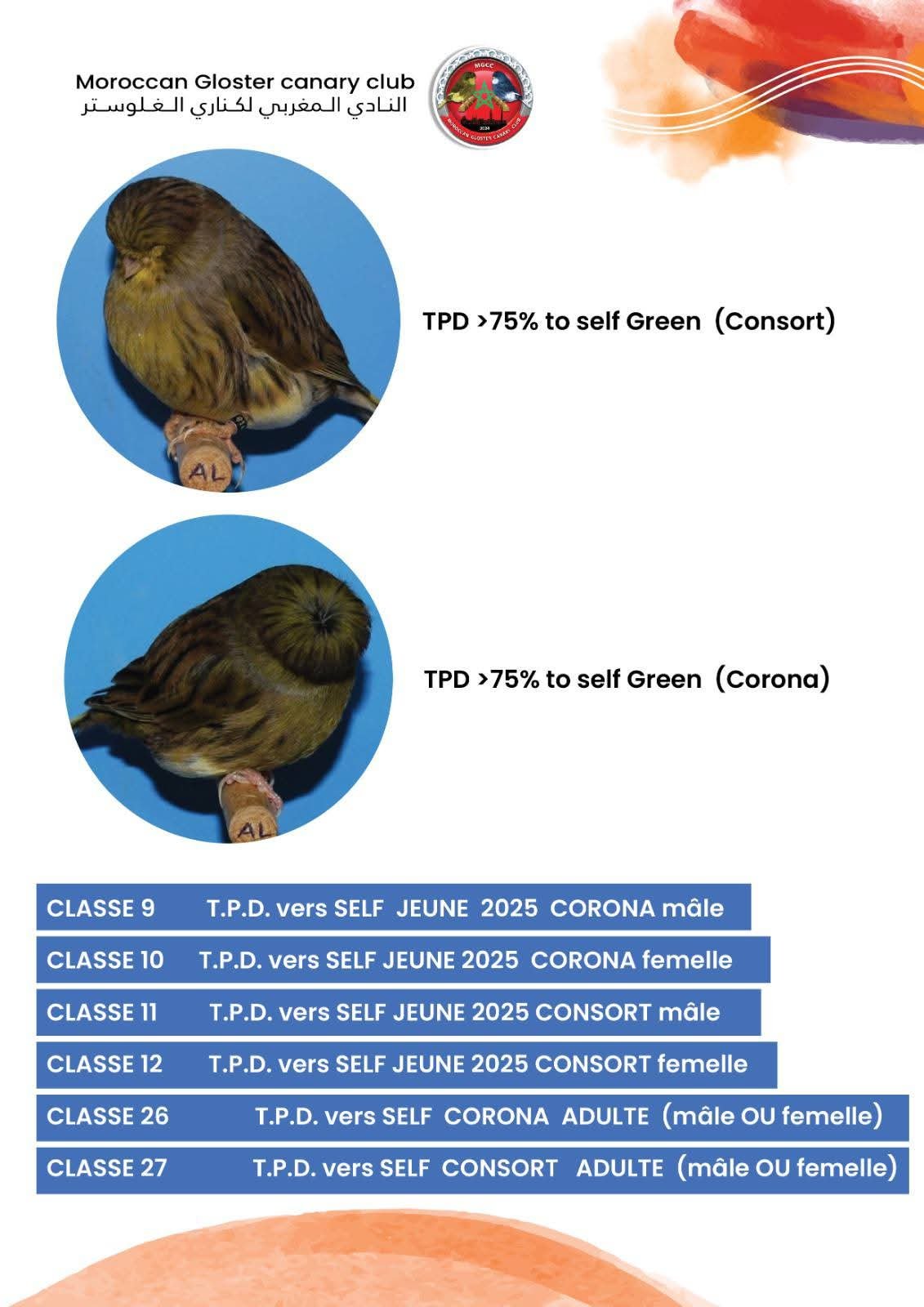
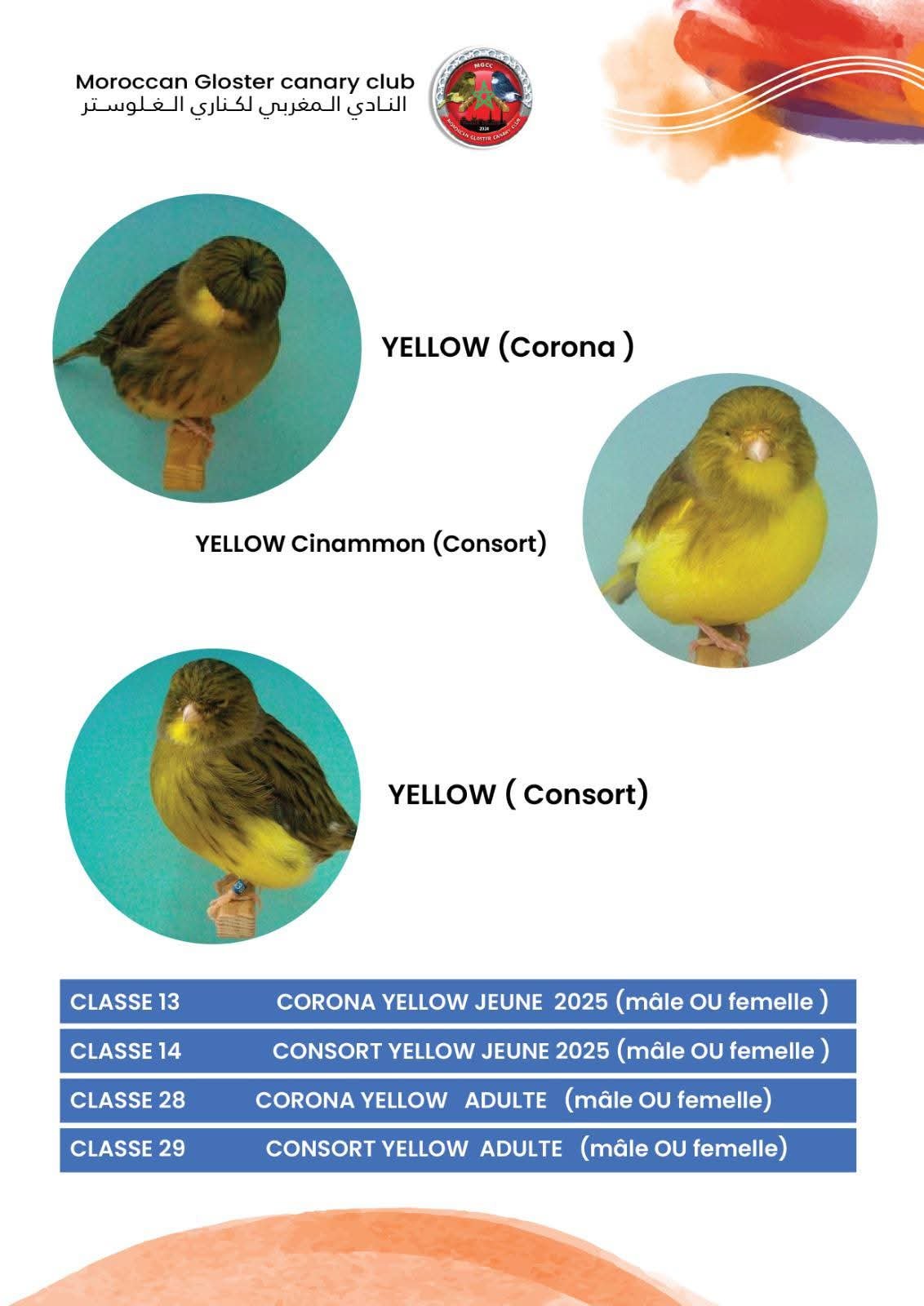
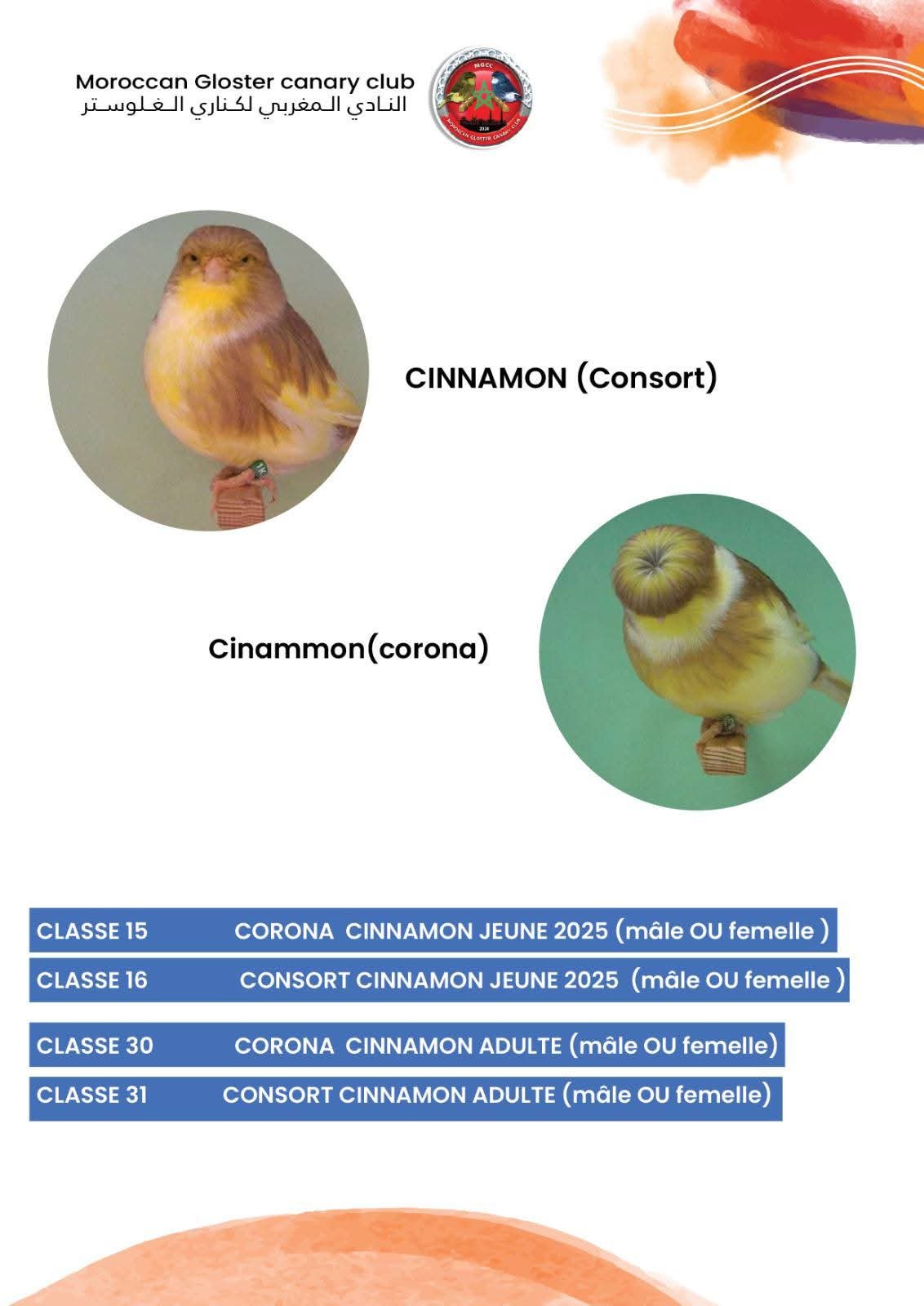
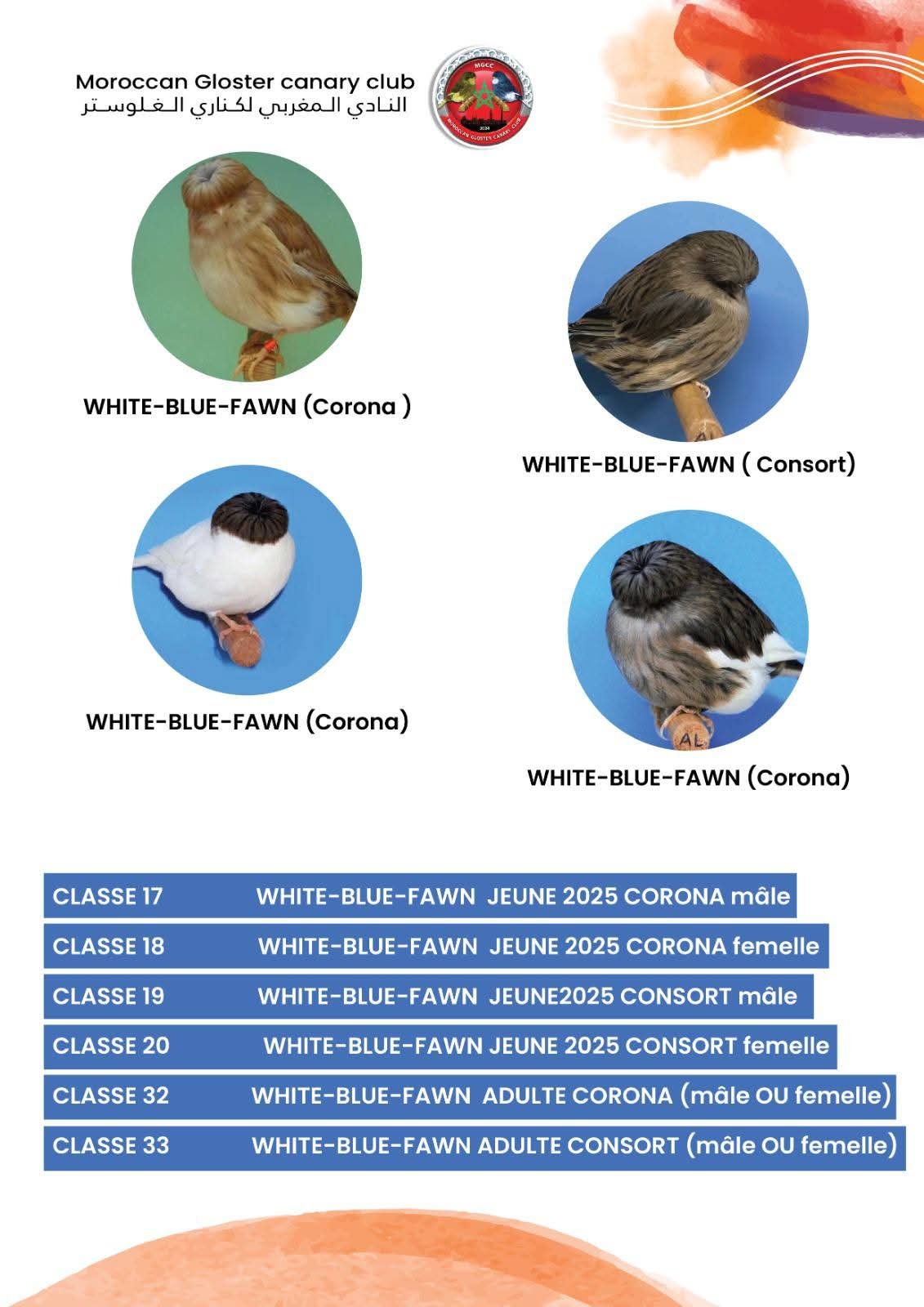
Beyond type, the Gloster comes in many colour varieties — Clear, Buff, Yellow, Cinnamon, Grizzle, TPD, White / Blue / Fawn — each recognised in Corona and Consort, with its own show classes.
The breed in pictures

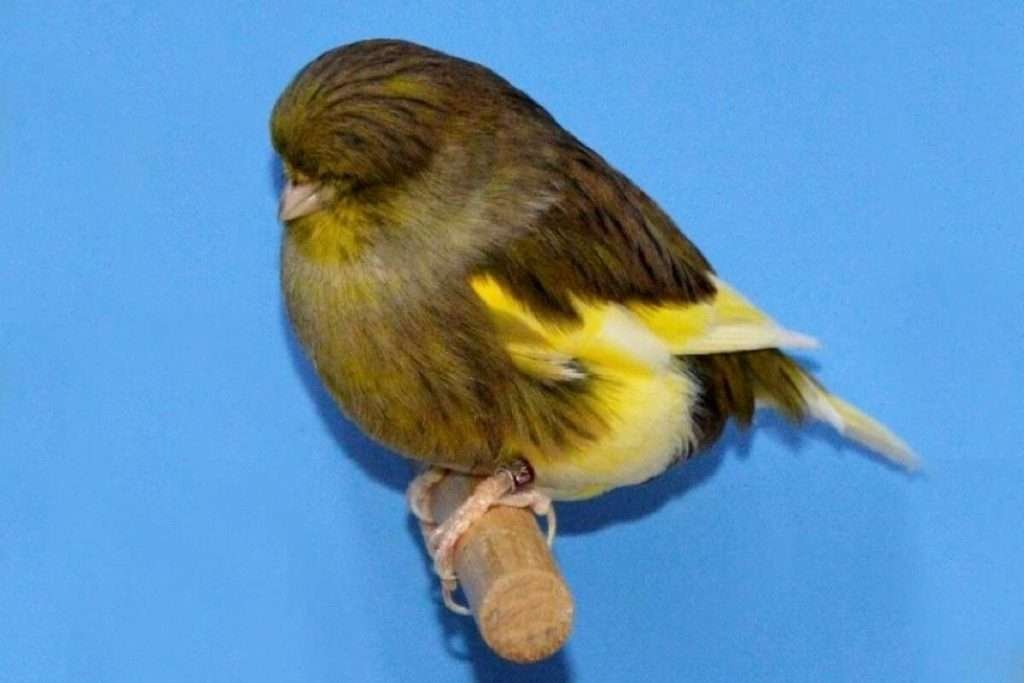
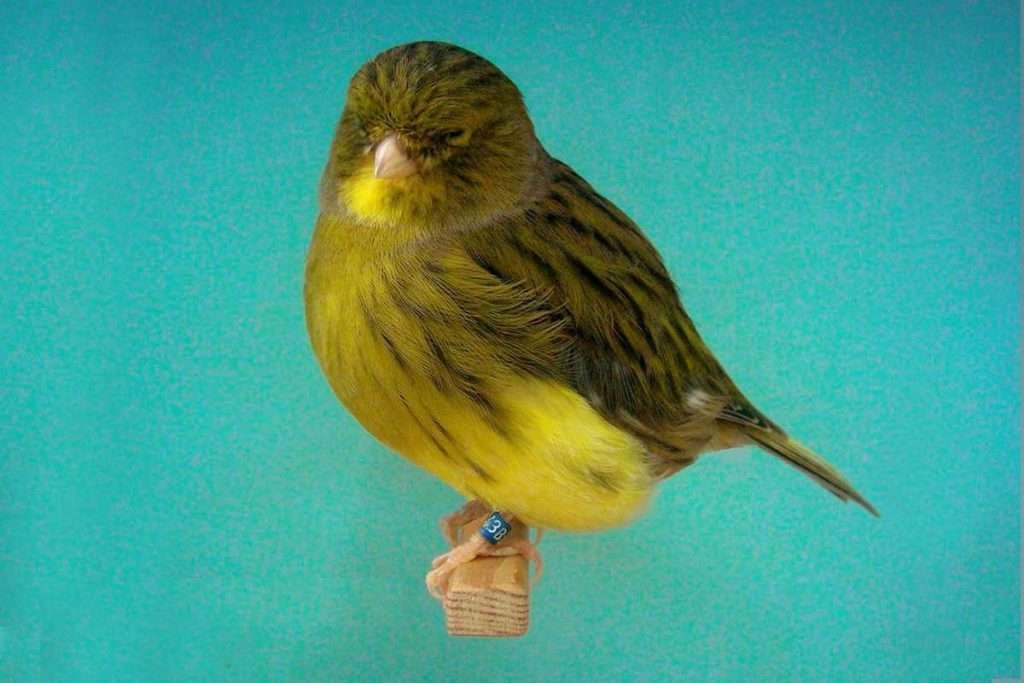
Gallery — the Gloster on show

A selection of birds presented in show cages. Click to enlarge.
Cage d'exposition Gloster
The show cage

Presentation to the standard

Optimal presentation does not depend on the bird’s standard alone: the show cage also meets precise specifications, ensuring all birds are judged under fair conditions.

The perch layout serves as a reference for assessing the bird’s length: perched towards one end of the cage, its tail must not reach past the opposite perch. Black external drinkers are standard, the label is placed on the left of the front (opposite the door), and the floor is covered with seed, in line with show regulations.

See the Gloster in competition

Every year the club organises the Moroccan Gloster Cup, judged to international standards.
FrançaisالعربيةEnglish